
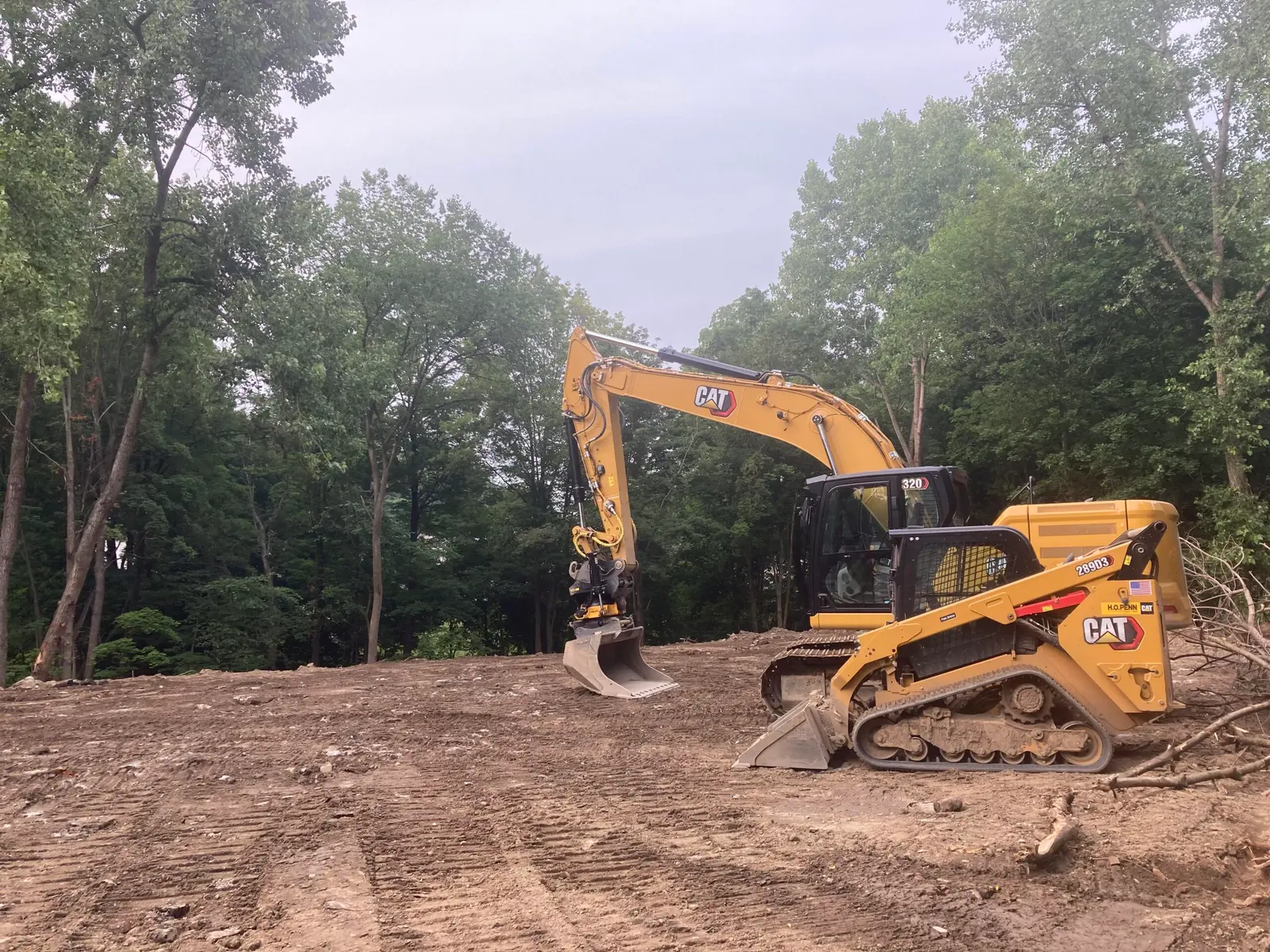
A landscape is a dirt problem long before it is a planting problem.
Landscaping & Earth Shaping in Paradise Valley, Montana
EZ Road Repair handles the heavy end of landscaping — the part done with excavators, dozers, and dump trucks rather than a wheelbarrow. Across Emigrant, Livingston, Pray, Chico, and Gardiner that means shaping grades, cutting terraces into sidehills, building berms, setting boulders, spreading topsoil, and getting the water sorted out before anything gets planted. We are not a lawn and garden maintenance outfit — we do not mow, prune, or run a seasonal yard service. We move and shape ground, then hand it off ready for planting and irrigation — often alongside a landscape designer who takes it from there.
When this matters
- The property is all sidehill with nowhere flat enough for a lawn, a patio, or a place to sit outside
- Water stands against the house, or the yard turns to mud and puddles every spring
- Grass will not take no matter what gets seeded, because there is almost no soil over compacted subgrade or river cobble
- A new build left the site at rough grade, topsoil stripped into a pile and the ground packed hard by equipment
- You want boulders, an outcrop, or a rock wall that looks like it grew there instead of like it was dropped off
- A pond, water feature, patio, or walkway needs the hole dug and the ground shaped before finish work can start
What Montana ground does to a landscape
Native topsoil here is thin — a few inches over glacial cobble on the benches, and often over dense clay down on the valley floor. Once construction equipment has run across it, what remains is compacted to the point that roots and water both stop at the same line. Grass on that ground looks fine in June and burns off in August, and watering harder does not fix it.
Freeze-thaw is the second force to design around. Moisture held in the upper soil freezes, expands, and lifts whatever sits on it: flagstone, pavers, dry-stacked stone, the bottom course of a wall. Anything built on ground that stays saturated moves every winter and comes back a little more crooked each spring. Keeping water away from hardscape, and out from under it, is most of what makes hardscape survive here.
Then there is runoff. Snowmelt off the Absarokas crosses a lot of these properties as sheet flow for a few weeks each spring, and it has no interest in the landscape plan. A berm built across that path becomes a dam. A flat cut into a slope becomes a pond unless it was given an outlet. Bare disturbed ground that goes into runoff season unprotected comes out of it as rills and weeds — knapweed and cheatgrass move into open dirt fast in this country.
Where this goes wrong
- Topsoil over compacted subgrade. Two or three inches of dirt spread across hardpan gives roots nowhere to go. The subgrade gets ripped or decompacted first, then topsoil goes on at a depth roots can actually use — deeper in planting beds than in lawn.
- Flat with no fall. Level is not the goal. Finished lawn and bed grades need real fall, on the order of one to two percent, and the ground against a foundation should drop noticeably over the first several feet so water leaves the building.
- Fill dumped instead of built. Berms and terrace fill pushed into place loose keep settling for years, and the shape you paid for is gone by the third spring. Fill goes in lifts and gets compacted, with slopes laid back flat enough to hold soil and be mowed.
- Boulders set on the surface. A boulder dropped on top of the ground always reads that way. Set right, a good share of it is buried, it bears on compacted material, and it tips back into the slope so it stays put and looks native.
- Walls with nowhere for water to go. Anything holding a slope needs free-draining backfill and drainage behind it, or frost and water pressure work it outward one winter at a time.
- Bare ground left through winter. Slopes and stripped areas that meet spring runoff with nothing on them erode, and the repair costs more than the seed would have.
How we approach it
We walk the property first — where water arrives, where it leaves, what the soil turns into a foot down, and what the machines can reach without wrecking what you are keeping. Existing topsoil gets stripped and stockpiled rather than buried, then reused at the end. From there we rough shape to the contours the plan calls for, cut terraces, and build every fill in compacted lifts, the same grading and leveling work we do on any site. Structure comes next: retaining walls or boulder walls where a grade has to be held, plus accent boulders and outcrops set with the same excavators that shaped the ground. Drainage is built into the shape rather than added on afterward — swales, positive fall away from structures, and erosion control or seedbed prep on slopes that need holding through runoff. Pond and water-feature digging happens at this stage; see pond construction. Then topsoil goes down over decompacted ground and gets graded to final, ready to seed, sod, or plant. Patios and walkways sit on base built the same honest way — see flagstone and pavers.
Sequence matters because the season is short. Earthwork and seeding both want enough of the year left behind them for ground to settle and grass to root before freeze-up.
Serving Paradise Valley & Southwestern Montana
Based in Emigrant, we shape ground throughout Paradise Valley — Livingston, Pray, Chico, Gardiner — and across the rural properties in between.
Get a landscape earthwork estimate
Call (406) 623-9075 or request a quote. Tell us what the ground does now and what you want it to become, and we will walk it with you and put together a straight estimate.
EZ Road Repair and Excavation — locally owned, Montana tough.