
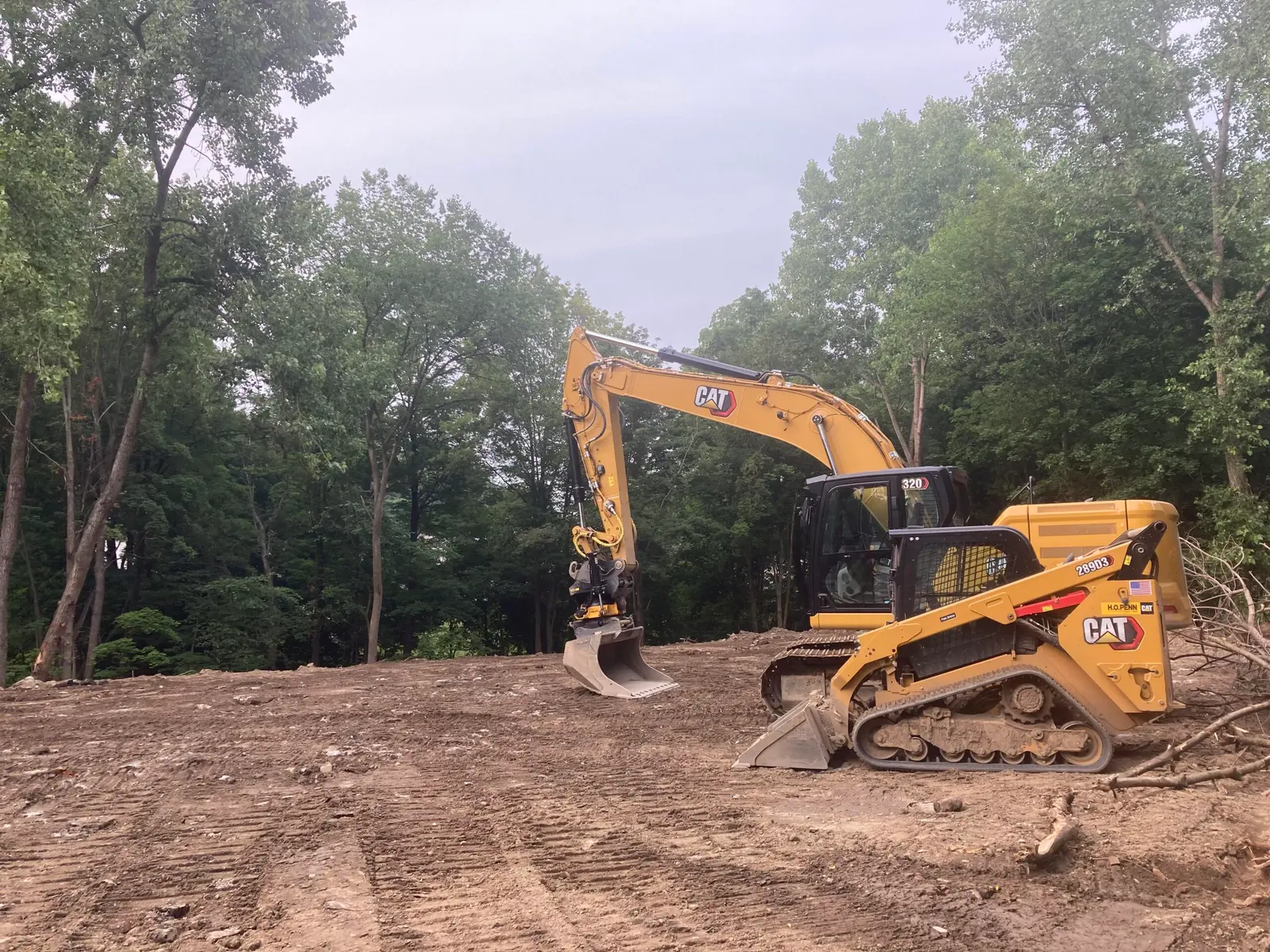
A pond is the one thing you build out here that has to hold water on purpose.
Pond Construction in Paradise Valley, Montana
EZ Road Repair digs, shapes, and builds ponds across Emigrant, Livingston, Pray, Chico, and Gardiner — stock and irrigation ponds, fire ponds, trout ponds, and landscape water. Whether a pond works for thirty years or becomes a low spot that never quite fills is decided before the first bucketful comes out: where it sits, what the soil is, where the water comes from, and where the big water goes when it leaves.
When this matters
- You need stock water or irrigation storage that doesn’t depend on a pump running all summer
- You’re a long way from a hydrant and want a draft source the fire district can use
- You want a trout pond that carries fish through a Paradise Valley winter, not just through August
- An old ranch pond has silted in, gone shallow and weedy, or the dam is seeping at the toe
- A spring or wet meadow already holds water and you’d like it held in one place, deeper
What actually decides whether a pond holds
Soil comes first, and in this valley it changes fast. Ground with a good fraction of clay and fines seals when it’s worked and compacted — it tightens up and slows seepage to something the inflow can stay ahead of. The benches above the river are a different animal: cobble, river rock, and clean sand that drain beautifully, which is exactly what you don’t want under a pond. Two sites a quarter mile apart can behave completely differently, so we dig test pits before committing to a shape. Those holes tell you whether you have a natural-seal pond, one needing its basin amended with clay or bentonite, or a site that wants a liner.
Sealing is a build detail, not a material detail. A clay blanket dumped in and smoothed over leaks; the same clay placed in thin lifts, compacted, and keyed into the sides holds. The dam follows the same rule.
Water source, and the paperwork that goes with it
Runoff-fed ponds fill fast in May and can sit low by September, so storage gets sized for the dry end of the year. Spring-fed ponds are steadier but lower volume, which changes the shape.
The source also drives the permitting, and that part is the owner’s process, not ours. In Montana, impounding or diverting water generally involves a water right through the DNRC, work in or near a live stream runs through the local conservation district under the state streambed law with FWP notified, and stocking fish is its own approval through FWP. We don’t file those or speak for any agency. We help you see early which ones your site is likely to touch, build to the approved design, and coordinate with whoever is reviewing it.
Spillway, depth, and life through the winter
The spillway is where most ponds are lost. It has to pass the runoff event, not the average year — snowmelt off the Absarokas moves a lot of water in a short window, and a spillway sized for a normal spring will cut a channel through the dam in a big one. So it goes in wide and flat enough to carry that flow at low velocity, set below the dam top with real freeboard, cut into undisturbed ground, and armored with riprap where the water lands. Where the outlet ties into a road, it gets handled like any culvert — sized for the water, not what fits.
Depth is what carries a trout pond through winter. Ice and long snow cover use up oxygen in a shallow pond, and a shallow pond also cooks in August. A real deep zone gives fish somewhere to sit in both seasons, with shallower shelves at the edges for insects and feed. Side slopes matter too: steep banks slump, grow weeds you can’t reach, and are dangerous around kids and stock. Gentle slopes hold their shape and give a machine somewhere to work when the pond needs cleaning.
Where pond projects go wrong
- Siting off a satellite photo. The prettiest bowl on the property is often the one full of gravel.
- No plan for silt. A pond fed by a bare drainage fills with the hillside. Upstream erosion control and a sediment forebay keep dirt out of the deep end.
- Dam built from whatever came out of the hole. Topsoil, organics, and rock don’t compact into a water barrier.
- Overflow dumped onto ground with no outlet. That just moves the problem downhill.
- No maintenance access. Every pond needs cleaning eventually, and that gets expensive when a machine can’t reach it.
How we approach it
We walk the site and look at the water first — source, reliability, and where the overflow goes — then dig test pits to see what the ground offers. From there we lay out basin shape, depth zones, side slopes, dam section, inlet, and spillway, and talk through the permitting path. Construction is the same excavation discipline we bring to everything: strip and stockpile topsoil, key and build the embankment in compacted lifts, shape and seal the basin, then cut the spillway and armor it. Inlet ditching and upstream drainage get shaped so the pond collects water instead of the hillside, and disturbed ground gets reclaimed and seeded so it isn’t feeding silt back in. On raw ground we tie in the access road and any clearing as one project.
Serving Paradise Valley & Southwestern Montana
Based in Emigrant, we build ponds throughout Paradise Valley — Livingston, Pray, Chico, Gardiner — and the ranch country around it.
Get a pond estimate
Call (406) 623-9075 or request a quote. Tell us what the pond is for, what water feeds it, and what your ground is like, and we’ll walk the site with you.
EZ Road Repair and Excavation — locally owned, Montana tough.