
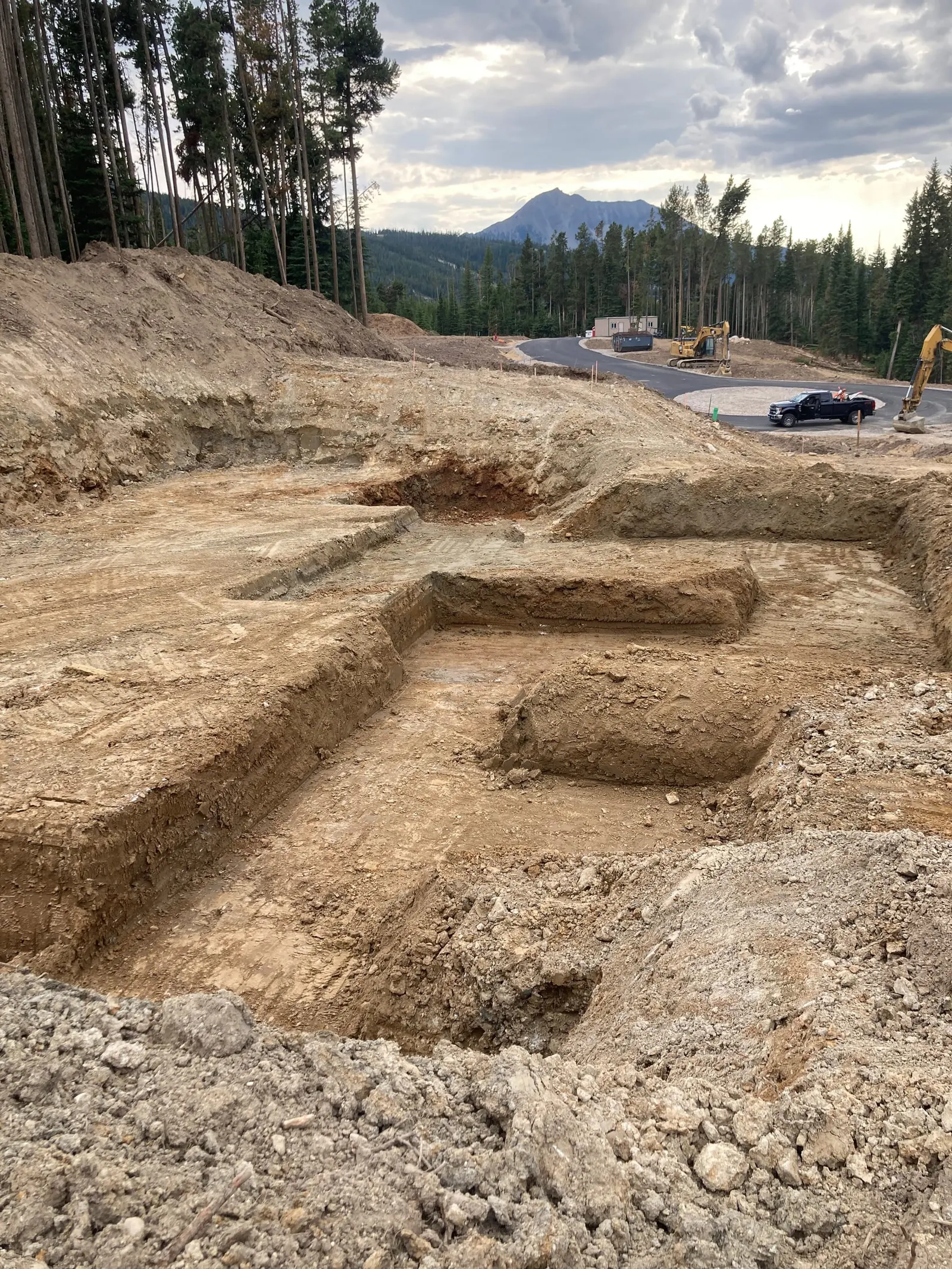
Build-ready ground, in the right order, before the first form board goes down.
Site Preparation & Demolition in Paradise Valley, Montana
Every build starts with the ground, and in this country the ground is rarely ready. EZ Road Repair clears, strips, cuts, fills, drains, and preps sites — and takes down what needs to come down — for homes, shops, cabins, and ranch projects across Emigrant, Livingston, Pray, Gardiner, Chico, and the rest of Paradise Valley. Get the site right and everything after it goes smoother. Get it wrong and you fight settling, drainage, and access for as long as the building stands.
When this matters
- A new home, shop, cabin, or addition that needs cleared, level, buildable ground
- Raw or wooded land that needs clearing and grubbing first
- An old house, barn, slab, or foundation that has to come out before the new one goes in
- A sloped site where the flat spot has to be cut out of the hill
- A wet corner or spring runoff channel crossing the footprint
- No equipment access, where concrete trucks and lumber deliveries can’t get in yet
What “build-ready” actually means
A cleared lot is not a build-ready lot. Build-ready means the organics are gone, the fill is engineered rather than pushed, and water has somewhere to go that isn’t your foundation.
Strip the organics. Topsoil, sod, roots, and duff hold moisture and rot. Anything organic left under a pad keeps decomposing and compressing for years, which is how you get a corner that drops and a crack that walks across the floor. We strip that layer off the footprint and stockpile it — good topsoil is worth money, and you’ll want it back for final grading and reseeding.
Cut and fill, not push and hope. Once we’re down to competent native ground, we cut the high side and place that material on the low side in lifts of roughly six to eight inches, compacting each lift before the next goes on. Fill dumped in a single three-foot pile and tracked over with a dozer looks identical on day one and settles unevenly for the next decade. On sloped sites, fill also has to be keyed into the hillside in benched steps, or the whole wedge eventually slides on the old ground surface.
Set the grade for water first. The pad should sit high relative to everything around it, with the ground falling away from the building on all sides — the standard rule of thumb is about six inches of drop in the first ten feet. That grade gets built in during prep, when it costs a machine hour, not after the slab is poured, when it costs a retrofit.
Balance the dirt. Hauling material in or out is a real line item, so where terrain allows we set finished elevations to make cut roughly balance fill and keep the material on your property.
What Montana ground does to a site plan
Paradise Valley sits on old river and glacial deposits, so a footprint can go from easy sandy loam to cobble to a bedrock shelf inside thirty feet. That changes what the excavation takes and sometimes what’s practical to build where — which is why we’d rather find it during prep than during footings.
Freeze-thaw is the other constant. Water in poorly compacted or poorly drained fill freezes, expands, and heaves the ground above it, then leaves voids behind when it thaws. Water lines have to go below frost depth, which here means several feet down, and the pad has to shed water rather than hold it. Spring runoff will find every low spot, old swale, and buried channel on the property — including the ones that look dry in August when you’re walking the site.
Then there’s the season. From ground thaw to hard freeze isn’t a long window, and site prep sits at the front of the critical path for foundation, utilities, framing, and inspections. Fall prep for a spring start is often the smartest scheduling move a builder can make here.
Demolition and haul-off
Demolition is its own sequence, not just knocking something over. Utilities get located and disconnected first, old septic and fuel tanks get dealt with properly rather than covered up, and older structures may need an asbestos inspection before anything comes down — we’ll tell you when you’re in that territory. Foundations and slabs get broken out and removed, not buried on site where they show up under someone’s footing later. Concrete and asphalt get recycled where we can, wood and slash get chipped or burned when county burn permits allow, and the rest gets hauled off. See our demolition services for teardowns as a standalone job.
How we approach it
We sequence the work so the equipment does the most in the fewest passes and the site is never dug up twice. Walk the ground and locate utilities, drainages, and property lines. Cut the access road first so trucks and deliveries can get in. Clear and grub the footprint, strip and stockpile topsoil. Rough grade with excavation and cut/fill, then set drainage — ditches, culverts, and positive fall away from the building. Build and compact the house pad to elevation. Cut the driveway and run utility trenches while the ground is open and the machines are already there. Then clean up and spread the saved topsoil. Because we handle excavation, drainage, roads, demolition, and materials in-house, you’re coordinating one local crew instead of four.
Serving Paradise Valley & Southwestern Montana
Based in Emigrant, we prep sites and handle demolition throughout Paradise Valley — Livingston, Pray, Gardiner, Chico — and take on new-build site prep in the Bozeman area as well.
Get a site prep estimate
Call (406) 623-9075 or request a quote. Tell us what you’re building, what’s on the site now, and your timeline, and we’ll walk the ground with you and put together a straight estimate.
EZ Road Repair and Excavation — locally owned, Montana tough.