
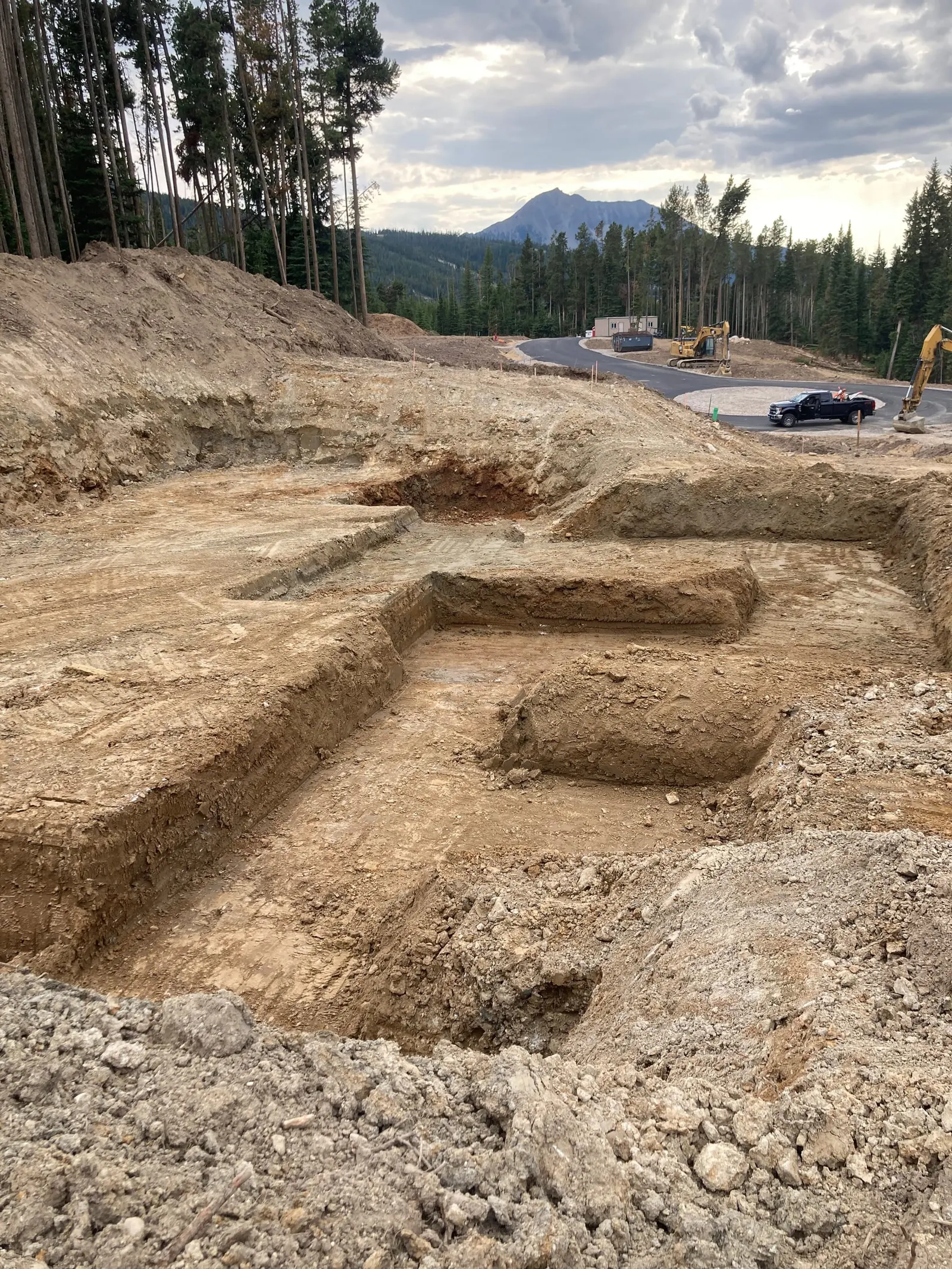
Moving dirt is easy. Moving the right dirt, to the right place, once, is the job.
Excavation & Earth Moving in Paradise Valley, Montana
EZ Road Repair is a locally owned outfit based in Emigrant, and bulk earthwork sets up everything after it. Cutting high ground down, filling low ground up, and reshaping a parcel so it drains and carries a load is work we do across Livingston, Pray, Chico, Gardiner, and the length of Paradise Valley. This is the volume side — balancing cut against fill, importing or hauling off material, and finishing to a grade you can build on or drive on. Precision digging for footings and trenches lives on our excavation services page.
When this matters
- A building envelope on a slope has to be cut and filled to a buildable grade
- A parcel has too much material in one place and nowhere near enough in another
- Ground sheds runoff toward a house, shop, or driveway instead of away from it
- A new road or driveway has to be carved into a hillside
- Spoil from a foundation, pond, or trench has nowhere planned to go
- A pasture, yard, or old corral never drained and holds water every spring
Balancing cut and fill on your own ground
The cheapest yard of dirt on a job is the one that never gets on a truck. Balancing a site means weighing what has to come off the high ground against what the low ground needs, then moving it the shortest distance between the two. When those numbers line up, a site gets reshaped without a load leaving or arriving.
They rarely line up on their own. Not everything you cut is usable — topsoil gets stripped and stockpiled for final grade rather than buried under a pad, and soft or organic material has no business under a structure or a road. Dirt also doesn’t hold its volume: it swells coming out of the hole and shrinks again once compacted. A site that pencils out balanced usually comes up short once the unsuitable material is set aside.
The import/export call gets settled before the machines start, not after a pile appears in the yard. If the site is short, we bring in and place structural fill, road mix, or topsoil. If it’s long, the excess hauls off or goes to work on site — a raised building pad, a berm, a windbreak, an old two-track that needs bringing up. Trucking is the expensive half of earthwork.
What Montana conditions do to bulk earthwork
Soils change fast here, sometimes inside one property line — clay on the valley floor that swells wet and goes greasy under tracks, glacial cobble and river rock on the benches, bedrock and boulders higher up. Rock changes both sides of it: oversize material gets sorted out, buried deep, or broken down — a lift full of cobbles cannot be compacted and won’t sit still under a slab or a road.
Water is the other force to build around. Snowmelt off the Absarokas moves through in a short, hard window and finds every low spot, every loose fill, and every cut without an outlet. Fill placed where water collects is fill that will settle, so drainage gets shaped into the earthwork as it goes rather than added afterward, and fresh slopes get laid back and seeded before runoff can channel them.
Access and season set the rest of the limits. Long private drives, soft spring ground, narrow bridges, and cattle guards decide what can reach a site and how heavy it can be. The window is short, too — bulk fill placed after frost sets in traps frozen chunks that thaw into voids come spring, so fall work gets sequenced to move dirt before the ground closes.
Where this goes wrong
- Fill dumped instead of built. Material pushed in and shaped keeps consolidating for years. It goes in in lifts at workable moisture, compacted as it is placed — compaction decides whether a pad holds or settles.
- Topsoil buried under the fill. Organics break down and leave settlement behind, and you have buried the material you needed at final grade.
- Fill laid on an unprepared surface. Fill over sod, brush, or a slick slope face has a plane to slide on. The receiving surface gets stripped, and fill against a hillside gets benched in.
- Cut and fill guessed by eye. Guess low and you buy and truck material mid-job; guess high and you’re left with piles nobody wants.
- Slopes left at the angle the bucket made them. Fill stacked too steep ravels, sloughs, and becomes an erosion problem instead of finished ground.
How we approach it
We walk the site first — existing grade, soil, rock, slope, access, and where water already goes — and set the finished grade before anything moves, so cut and fill get worked against each other. Utility locates come before the first bucket. Clearing and grubbing come off, then topsoil is stripped and stockpiled clear of the work. Cutting works from the high ground with material moving downhill into the fill areas, placed in lifts and compacted as it goes, and the haul route is planned so loaded machines aren’t tracking back across ground already built. Oversize rock gets buried deep or used on slopes rather than mixed into structural lifts. Once the mass is moved, we grade and level to finish, cut swales and ditches, set culverts where water crosses, respread topsoil, and tie the site into the road serving it. A full raw-to-buildable job runs as site preparation, with earth moving as one stage.
Serving Paradise Valley & Southwestern Montana
Based in Emigrant, we move earth throughout Paradise Valley — Livingston, Pray, Chico, Gardiner — and take on site work toward Bozeman and Big Timber.
Get an earth moving estimate
Call (406) 623-9075 or request a quote. Tell us what the ground looks like now and what you need it to become, and we’ll walk it and put together a straight estimate.
EZ Road Repair and Excavation — locally owned, Montana tough.