
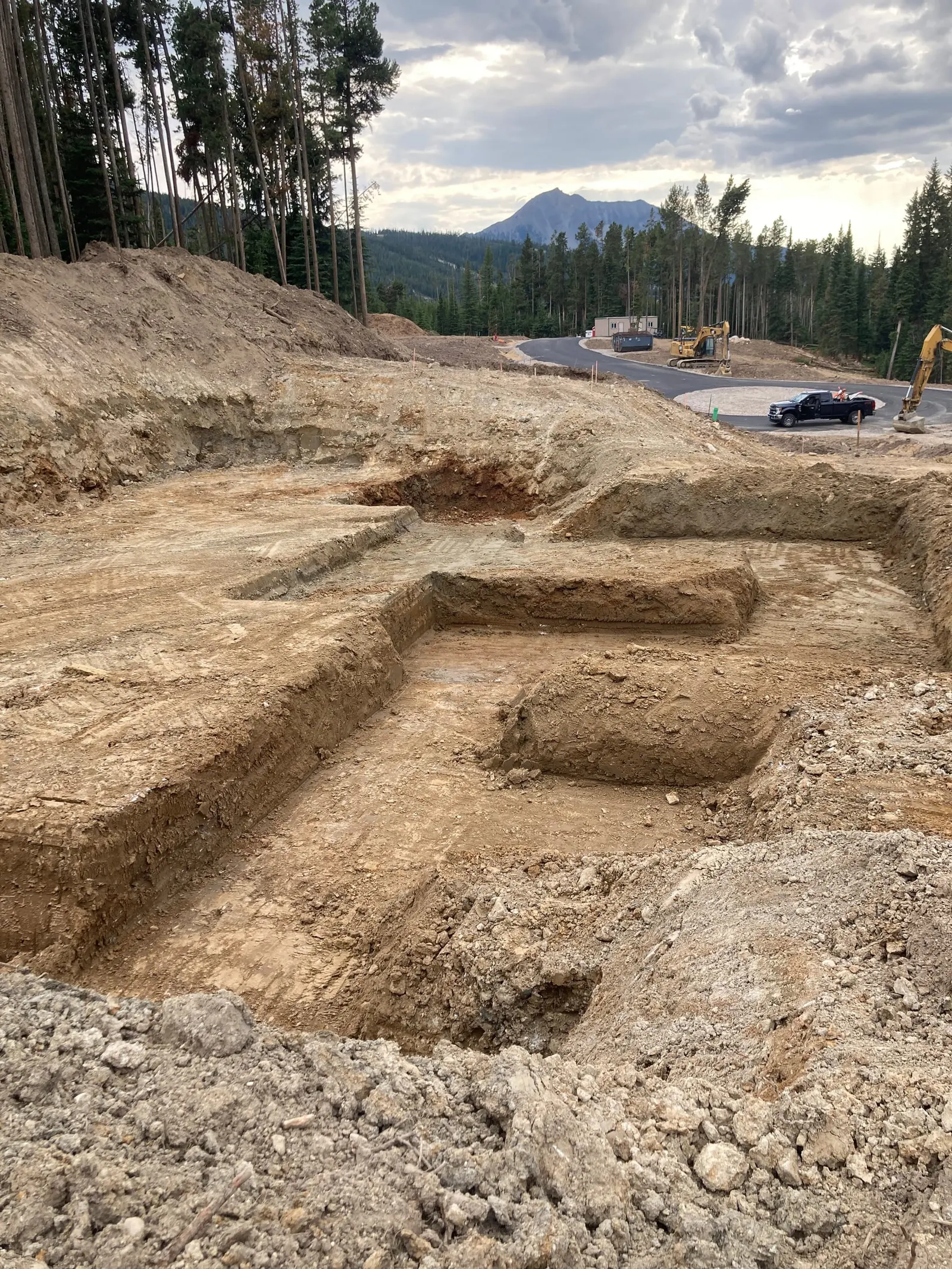
Level ground isn’t flat ground. It’s ground that’s smooth enough to use and still aimed somewhere.
Lot Leveling in Paradise Valley, Montana
Rough, rocky, humped ground limits what a property can do. You can’t mow it, park a trailer on it, or set a building on it, and every spring it holds water in the same three low spots. EZ Road Repair levels lots, yards, building envelopes, corrals, and parking areas across Emigrant, Livingston, Pray, Chico, Gardiner, and the length of Paradise Valley — cutting the high ground, filling the low in compacted lifts, and finishing to a surface that drains. The goal is ground you use, not ground you work around.
When this matters
- A building envelope that needs smooth, workable ground before the pad goes in
- A yard too rough, rocky, or hummocked to mow, irrigate, or landscape
- Parking and turnaround areas for trucks, trailers, and equipment
- Low spots that pond every spring and stay mud into June
- Corrals, arenas, and ranch work areas that need firm, even footing
- A parcel just cleared of brush and stumps and left a field of holes and windrows
“Level” is a slope you can’t see
A lot that reads dead flat to the eye is usually a lot that holds water. Every leveled surface we finish carries a deliberate fall — commonly 1 to 2 percent across an open area, a foot or two of drop over a hundred feet. Nobody standing on it calls that a slope. Water does.
Near structures the fall gets steeper: a common standard is about six inches of drop in the first ten feet away from a foundation, then continued fall until the water is somewhere you don’t mind it. That last part gets skipped constantly — sloping away from the house only relocates the problem if the water lands in a closed low spot forty feet out. Before we shape anything we decide where water leaves the property, and if there’s no outlet we build one: a swale, a ditch, a culvert crossing, or a tie-in to the rest of the drainage.
Topsoil is the part you can’t buy back
Topsoil here is thin — often a few inches over cobble — and it’s the only material on the lot that grows anything. Grading it into the fill is the easiest way to ruin a lot and the hardest thing to undo.
So it comes off first. We strip it, stockpile it clear of the equipment path, shape and compact the mineral ground underneath, then respread it over the finished grade. It matters structurally too: organics buried under fill keep decomposing, which is how a lot that was level in September develops soft dishes by the third spring.
Where this goes wrong
- Fill dumped, not built. Loose fill pushed into a low spot and bladed smooth reads level on day one and settles for years. Fill goes in lifts and gets compacted — compaction is what makes it hold.
- Compacting outside the moisture window. Material only knits together in a workable moisture range. Bone-dry August cobble and saturated November clay both resist compaction no matter how many passes go over them.
- Cut and fill that ignores frost. Uncompacted fill saturates, freezes, heaves, and thaws into a void. Where cut ground meets deep fill, one side of the lot stays put while the other works all winter.
- Water leveled onto someone else. Reshaping a lot changes where runoff goes — pushing it into a road ditch, a neighbor’s field, or across a driveway trades one problem for a bigger one.
- Grading over what’s buried. Cutting depth off a drain field, a shallow water line, or a power run is expensive. Locates come before the ripper.
- Bare cut slopes left through runoff. Fresh cut with no cover feeds sediment into the ditch during melt. Steep faces get erosion control, seeding, or a retaining wall rather than a slope that won’t stand.
Lot leveling or pad building?
They overlap, and most builds need both. Lot leveling shapes the broad area — yard, envelope, parking, ranch work area — into smooth, drained, usable ground. Pad building is the structural version: a tighter footprint built up in compacted lifts to carry a foundation. We level the lot, then build the pad slightly proud of the ground around it so runoff never stands against the slab. More on that here: pad building vs. lot leveling.
How we approach it
We walk the lot before quoting it — soil, rock, slope, access, and what the water has been doing, which the scour lines and the spot that never dries out will tell you. Locates go in before anything gets ripped. From there the sequence is usually the same: strip and stockpile topsoil, then balance cut and fill so most of the material stays on site, since hauling dirt off and importing it back is the expensive way to move ground. Rock gets ripped, pulled, and sorted — usable stone becomes fill, rip-rap, or landscape rock. Fill goes back in compacted lifts to a subgrade that’s shaped, not just smoothed, and finish grading sets the final fall. Topsoil comes back over the ground that needs to grow. On a larger job we run it alongside the earth moving, site prep, utility trenching, and driveway work, so one crew handles the whole ground package.
Timing matters: the dirt window is short and frozen ground won’t compact, so a fall-leveled lot can overwinter and be seeded at green-up.
Serving Paradise Valley & Southwestern Montana
Based in Emigrant, we level lots throughout Paradise Valley — Livingston, Pray, Gardiner, Chico — and the surrounding ranch and rural properties.
Get a lot leveling estimate
Call (406) 623-9075 or request a quote. Tell us the size of the area, what it’s for, and what the ground does when it rains, and we’ll walk it and put together a straight estimate.
EZ Road Repair and Excavation — locally owned, Montana tough.