
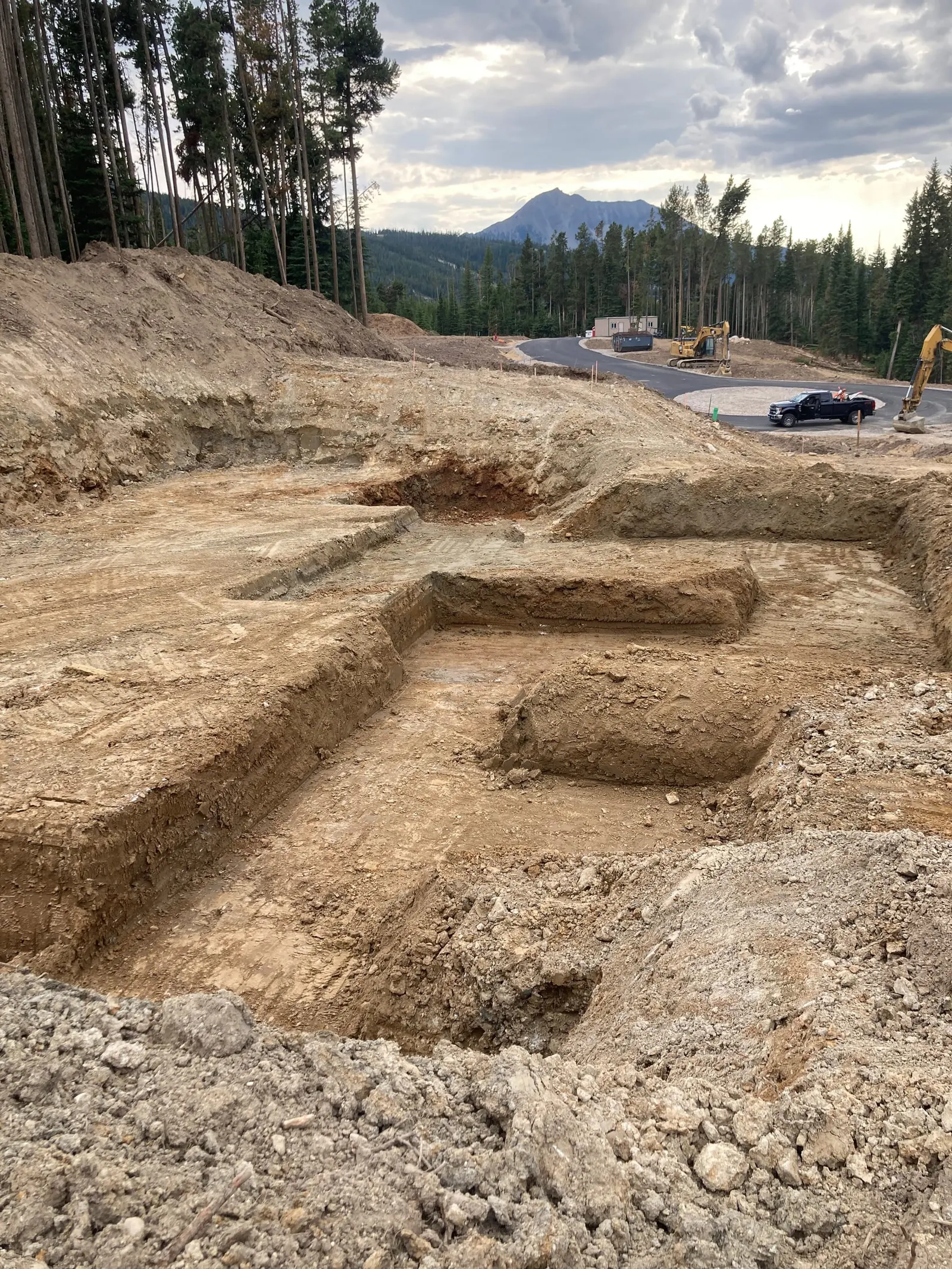
A build runs on deliveries, and every delivery arrives over the access road.
Construction Site Access & Tracking Pads in Paradise Valley, Montana
EZ Road Repair builds construction access across Emigrant, Livingston, Pray, Chico, and Gardiner — temporary haul roads, stone tracking-pad entrances, truck turnarounds, and laydown pads that keep deliveries rolling and mud off the county road. A loaded ready-mix truck weighs a different order of magnitude than the pickup that scouted the site, and it arrives the week the schedule says, not the week the ground is dry. Access a driver won’t trust doesn’t delay one delivery — it delays every trade behind it, and out here a lost week in October can cost the season.
When this matters
- A new build reachable only by a two-track, with the first heavy delivery already booked
- Soft or wet ground where a loaded truck will find the axles before it finds the pad
- An entrance pumping mud onto a paved county road and drawing exactly the attention nobody wants
- No room for a mixer or lumber truck to turn, so drivers back a quarter mile out to the road
- A build running through winter and mud season that can’t lose delivery weeks
- A finished driveway you don’t want a season of construction traffic to destroy
What a loaded truck actually needs
Access gets designed around the worst vehicle on the schedule, not the average one. A ready-mix truck, a crane, or a lowboy hauling a dozer sets the width, the turning radius, the grade, and the thickness of the section. In practice: a surface wide enough for the truck plus shoulder, a turnaround sized for its swing rather than a pickup’s, and grades a loaded rear axle can pull without spinning. A pitch your truck shrugs at stops a loaded mixer cold on wet gravel, and grade is nearly impossible to undo once the route is cut.
What’s under the surface matters more than what’s on it. Topsoil and organics come off the alignment first — driving on black dirt is driving on a sponge — and base goes up in compacted lifts instead of getting dumped and called a road. Over soft subgrade, geotextile fabric between the dirt and the rock keeps the two from mixing, so the rock stays a structural layer instead of disappearing into the mud. Compaction is what turns loose material into something that carries load; skip it and you have gravel sitting on top of the problem.
The entrance, the tracking pad, and the water
The site entrance is the hardest-worked twenty feet on the job. Every vehicle turns there, brakes there, and either leaves its mud there or carries it onto the public road. A tracking pad is a section of coarse, angular, clean stone — big enough that it can’t pack into a smooth surface — set deep and long enough that tires turn over several times crossing it. The angularity is the point: rounded river rock rolls under a tire and does almost nothing. Tracking pad stone is a specific material, not leftover driveway gravel, and it usually goes in inside an afternoon.
Drainage belongs in the route from day one, not after the first storm. A haul road with no crown and no ditch collects water in its own wheel tracks, and every loaded pass drives that water deeper into the base. A crown of roughly 2 to 4 percent sheds it, ditches falling around 1 to 2 percent carry it away, and where the access crosses a barrow ditch it needs a properly sized culvert so the ditch keeps running under the road rather than backing up behind it.
Where this goes wrong
- Sized for the pickup that walked the site. The route works fine until the first tandem can’t make the corner.
- No turnaround. Backing a loaded truck out costs time on every delivery, and eventually costs a fence, a corner of the pad, or a tree.
- Haul traffic over the wrong ground. Loaded trucks cross the future drain field, the building envelope, or the finished yard, and that damage surfaces later at somebody else’s expense.
- Laydown wherever there’s room. Staging lands on the flattest ground, which is usually the wettest, and material spends the summer sinking.
- Finish surface placed first. Road mix laid before the heavy phase gets chewed up by traffic it was never meant to see, so it gets paid for twice.
- No plan for freeze-thaw. Water trapped in an uncrowned base lifts and softens the road every thaw cycle, and by April the route is worse than the pasture it replaced.
How we approach it
We plan access off the construction schedule: what is the heaviest vehicle, which season does it land in, and does this route live on after the build. From there we clear and strip the alignment, cut grade, and build base in compacted lifts — usually the opening move of a full site preparation package, so it happens on one mobilization. Drainage goes in with the road: crown, ditches, and culverts before the first load rather than after the first washout. We set the tracking-pad entrance, put turnarounds where the trucks actually need them, and build firm, drained laydown pads clear of the building envelope and the drain field, with haul routes kept off the ground you want protected. When the access becomes the permanent driveway, we build the base to driveway standard up front and hold the surface course until the heavy trades are gone — one road, one time. When it was truly temporary, we pull the rock, rip the compaction, and reclaim the ground so it grows again.
Serving Paradise Valley & Southwestern Montana
Based in Emigrant, we build site access throughout Paradise Valley — Livingston, Pray, Chico, Gardiner — and for projects out toward Bozeman and Big Timber.
Get a site access estimate
Call (406) 623-9075 or request a quote. Tell us where the site is, what’s being built, and when the first heavy delivery lands, and we’ll walk the route with you and have it ready before the truck shows up.
EZ Road Repair and Excavation — locally owned, Montana tough.