
Open the ground. Grub it clean. Build on it.
Land Clearing in Paradise Valley, Montana
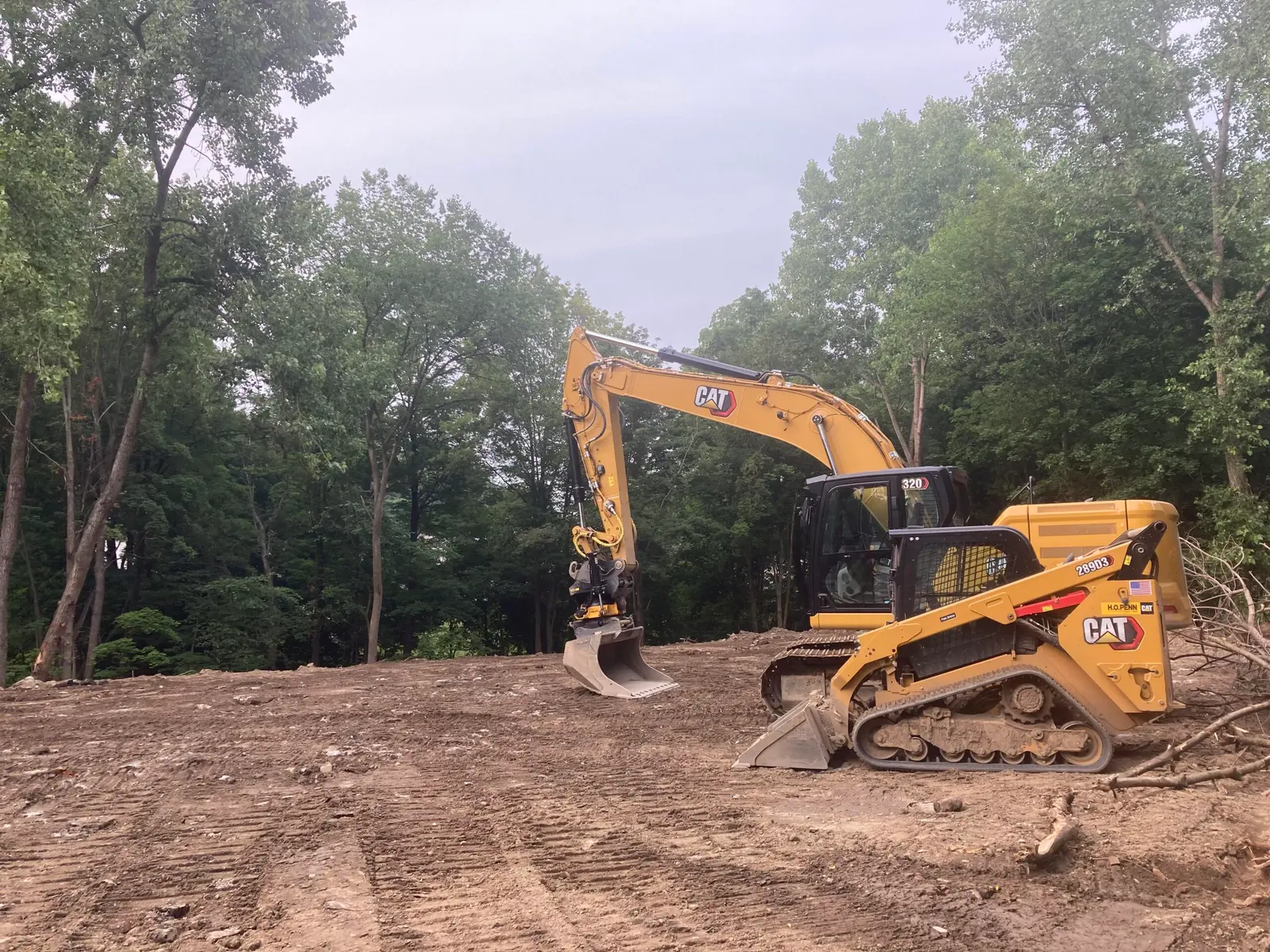
Before you can build, ranch, or reclaim a piece of ground, it has to be cleared the right way. EZ Road Repair clears and grubs land — trees, brush, stumps, and rock — across Emigrant, Livingston, Pray, Gardiner, Chico, and the rest of Paradise Valley. This is rough country: glacial rock in the soil, timber running down off the benches, and parcels the county road only gets you close to. Clearing it with the right equipment is faster, safer, and cleaner than fighting it a chainsaw at a time.
This is whole-parcel work — acreage, building sites, pasture, and pad areas. If what you need is a linear job along wire, that’s fence line and brush clearing, a different machine setup.
When this matters
- Opening ground for a new home, cabin, shop, barn, or outbuilding
- Reclaiming overgrown pasture, old corrals, and ranch acreage that has gone to brush
- Cutting in a new driveway or access road through trees and rock
- Creating defensible space to reduce wildfire fuel around structures
- Clearing a lot you bought sight-unseen under snow and now can’t walk through
- Turning rough, unusable ground into functional, workable land
Clearing is not grubbing — and the difference shows up later
Clearing is what you see: the trees, brush, and slash come off. Grubbing is what you don’t — root balls, stumps, and buried organic material pulled out of the soil profile. Skipping the grubbing is the most common way a cleared site becomes a problem two years later.
Wood buried under a pad or a road rots. As it breaks down it leaves voids, and the fill above drops into them — a dip in a new driveway, a soft spot in a shop floor, a settled corner on a house pad. Standard practice on structural fill is to strip organics and topsoil out of the footprint first, then place and compact fill in lifts on clean, firm subgrade. Organic pockets also hold water, and water sitting in a pocket through a Montana winter freezes and heaves the ground above it.
Topsoil is worth separating while you’re at it. Stockpiled on its own — not mixed into the slash pile — it goes back on disturbed slopes and cut banks at the end of the job, which is what actually gets seed to take.
Defensible space, done as clearing rather than trimming
Around a home or cabin, the goal isn’t a bare lot. It’s breaking up the fuel so fire on the ground can’t climb into the crowns and run at the structure. Standard wildfire guidance works in zones out from the building: the first few feet kept clear of anything that burns, roughly the first thirty feet thinned and kept green, and the outer zone thinned to break up continuous fuel. Check current Montana DNRC and Park County guidance for your address.
In practice that means pulling the ladder fuels — the brush and small conifers under mature trees that carry fire upward — limbing lower branches, spacing crowns, and getting duff and dead-and-down material away from foundations, decks, and propane. Slash piles get sited well off the buildings and out of drainages. Burning is possible in season but is permit-dependent through the county, so plan on hauling or chipping if the timing doesn’t work.
What Montana ground does to a clearing job
Rock. Paradise Valley soils are full of glacial and alluvial cobble and boulders. Rock drives both cost and schedule, and it’s also an asset — good boulders out of a clear are worth stockpiling for boulder walls or riprap instead of hauling off and buying back later.
Runoff. Freshly cleared ground on a slope is bare ground, and the first spring runoff will rill and gully it. Temporary water bars, seeding, and erosion control belong in the same conversation as the clearing, not the following year.
Season and moisture. Wet meadow ground and spring mud rut badly under tracks and haul trucks, and those ruts become the drainage pattern. Frozen or snow-covered ground is an advantage on a soft site, which is why fall and winter clearing is often the right call to set up a spring start.
Access. Remote parcels, narrow bridges, weight limits, tight gates, and steep two-tracks decide what equipment can get in before anything else does. That gets figured out before mobilization, not on the day.
Weeds. Disturbed soil is an invitation to spotted knapweed, houndstongue, and leafy spurge. Cleaning equipment between parcels and getting cover back on bare ground is the practical defense.
How we approach it
We walk the property with you first and agree on the plan: what comes out, what stays, where the debris goes, and how the water is going to move once the cover is off. Then we clear and grub with excavators, dozers, and loaders, sorting as we go — merchantable logs and firewood one place, slash another, rock stockpiled, topsoil separate.
From there the ground gets handed to whatever comes next, with the same crew and the same equipment already on site: site preparation, grading to shape the parcel, a house or shop pad built and compacted in lifts, and drainage roughed in before anything gets covered.
One thing worth flagging early: if the clearing touches a live stream, spring, or irrigation ditch, that work can fall under a 310 permit through the local conservation district. We’ll tell you when you’re in that territory so it gets handled up front.
Serving Paradise Valley & Southwestern Montana
Based in Emigrant, we clear land throughout Paradise Valley — Livingston, Pray, Gardiner, Chico — and the surrounding ranch, river, and mountain country.
Get a land clearing estimate
Call (406) 623-9075 or request a quote. Tell us the acreage, what’s growing on it, the access, and what you’re clearing it for, and we’ll walk it with you and give you a straight estimate.
EZ Road Repair and Excavation — locally owned, Montana tough.