
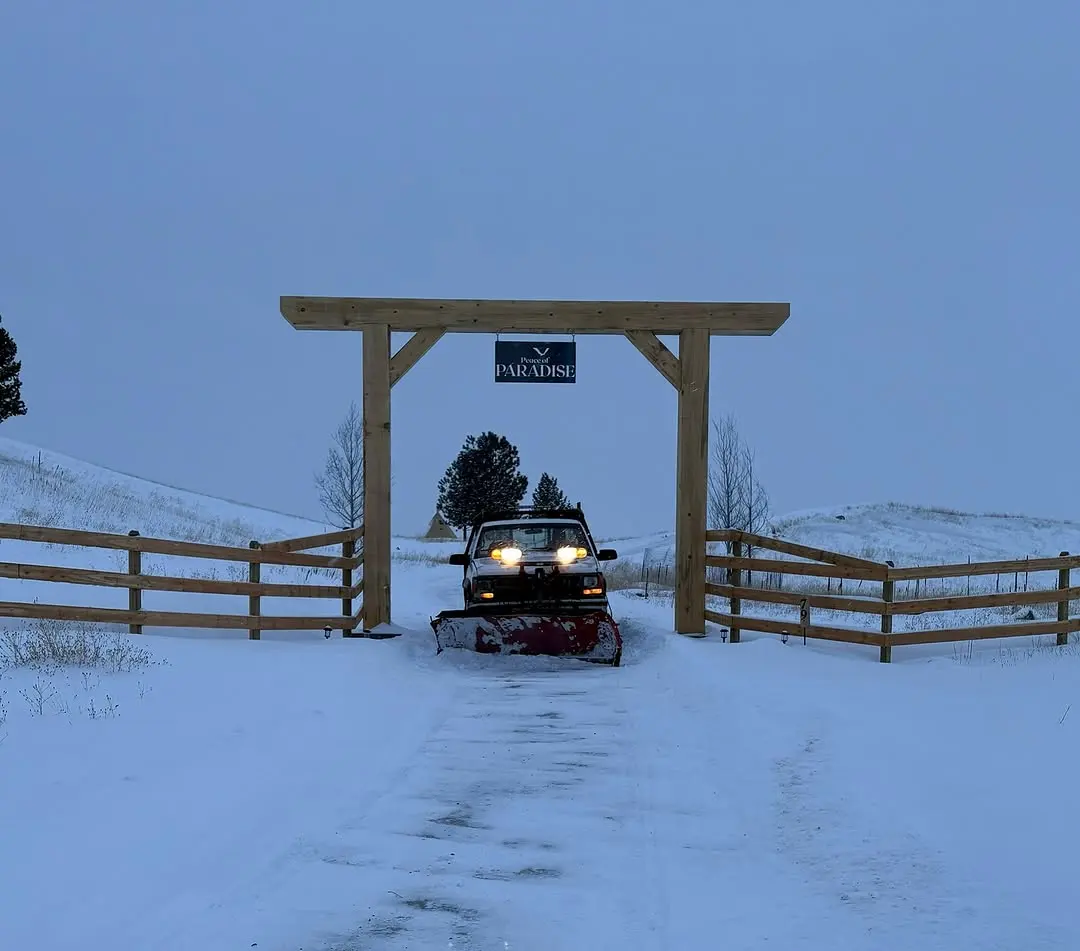
When a storm outruns the schedule, the problem stops being snow and starts being access.
24/7 Emergency Snow Removal & Ice Control in Paradise Valley, Montana
When a driveway drifts shut overnight, a lot is buried before opening, or a ranch road cuts you off from stock mid-feeding, EZ Road Repair runs emergency snow response day and night across Emigrant, Livingston, Pray, Gardiner, Chico, and the length of Paradise Valley — with the loaders and skid steers deep, wind-packed snow actually requires. A pickup with a blade is the right tool for six inches of fresh, and the wrong tool for a wind slab standing chest-high at the end of your lane.
When this matters
- Drifted or buried access when you have to get out, or someone has to get in
- Medical, caregiver, or emergency-vehicle access that can’t wait for a route
- A business, rental, or shop buried before customers or guests arrive
- Ranch roads cut off from barns, stock, and feed
- A grade iced hard enough that one vehicle has already slid off it
Why storms bury access here so fast
Snowfall totals are the least useful number here. What closes a driveway is wind. A six-inch storm with the wind behind it scours one side of a fence line to bare gravel and piles the other side four feet deep, and wind-driven snow is nothing like what fell: flakes get broken into fine grains and packed, so a drift is far denser and heavier than fresh powder. That’s why a truck plow that handled the storm fine at 9 p.m. is stalled out in the same driveway at 2 a.m.
Drifts build on the lee side of anything that slows the wind — shelter belts, buildings, fence lines, road cuts, and most often the snowbanks left by the last plow pass. A bank stacked right along the driveway edge is a snow fence you built yourself, and it refills the lane you just cleared. Ground blizzards prove it: no new snow, clear sky, driveway shut by afternoon. Depth is the other trap — once accumulation is above blade height you’re compacting a wall instead of moving snow, and the job becomes relocating material with a bucket, one bite at a time.
Where emergency snow work goes wrong
- Waiting until it’s over the blade. A driveway cleared at 18 inches takes a fraction of the time it takes at 40. If it’s still blowing and you know you’ll need out, call early.
- Stacking uphill of the building. A pile above the house or against a garage door is a lot of water aimed at your foundation in April. Snow gets staged where the melt runs away.
- Blade set too low on gravel. A cutting edge dropped into a gravel surface windrows your road mix into the ditch, and you buy it back in spring. Shoe height gets set for the surface.
- Unmarked hazards. Culvert ends, ditch edges, and landscape rock all vanish under snow. Staking driveway edges in fall is cheap insurance.
- Clearing to car width only. A path wide enough for your car is not wide enough for an ambulance or a propane truck.
- Expecting salt to solve it. Below roughly 15 to 20 degrees salt does very little, and it is hard on concrete and on plantings.
Ice control after the storm
The snow stops and the ice starts. Thaw-freeze cycles turn packed lanes and drainage crossings into rinks, so we follow the push with sand and gravel traction where the wrecks happen: the entrance onto the county road, grades, curves, and shaded north-side stretches that refreeze every night no matter how warm the afternoon got. Traction works mechanically at any temperature, and it gets renewed after each melt cycle rather than once a winter.
If the same twenty feet ices up every year, that isn’t a snow problem. It’s water crossing the surface from an uphill ditch, a low spot with no outlet, or a culvert that plugged in December — a drainage fix worth doing in the off-season instead of sanding it forever.
How we approach it
When you call, tell us what’s blocked, who needs access, and how deep it is at the worst spot — that matters more than the storm total. We triage by severity and accessibility, put medical and emergency-vehicle access first, and keep the route moving around the clock during a storm cycle. You’ll get realistic timing on the phone, not a promise that falls apart when the wind picks up.
On site we open one lane first so somebody can get out, then widen for turnaround and emergency-vehicle room. Snow gets pushed well back from the driveway edge and staged downhill of structures, clear of walkways and drain fields. Steep and curved sections get worked in passes rather than one heavy cut. When the banks have swallowed the parking or the sight lines, snow hauling takes the piles off instead of shuffling them.
Most properties are better served before a storm than during one: residential plowing for homes and long lanes, commercial lots for businesses that have to open, and seasonal contracts that put you on the route ahead of the scramble. A crowned, well-drained surface also plows faster, so a fall regrade pays for itself over a winter. Full lineup at the snow removal hub.
Serving Paradise Valley & Southwestern Montana
Based in Emigrant, mid-valley — which matters when the clock is running. We respond throughout Paradise Valley: Livingston, Pray, Gardiner, Chico, and the ranch country between.
Get emergency snow help or an ice control estimate
Snowed in right now? Call (406) 623-9075 and we’ll give you honest timing and get you on the list. If the storm has passed and you’d rather not repeat this, request a quote and we’ll set up service before the next one.
EZ Road Repair and Excavation — locally owned, Montana tough.