
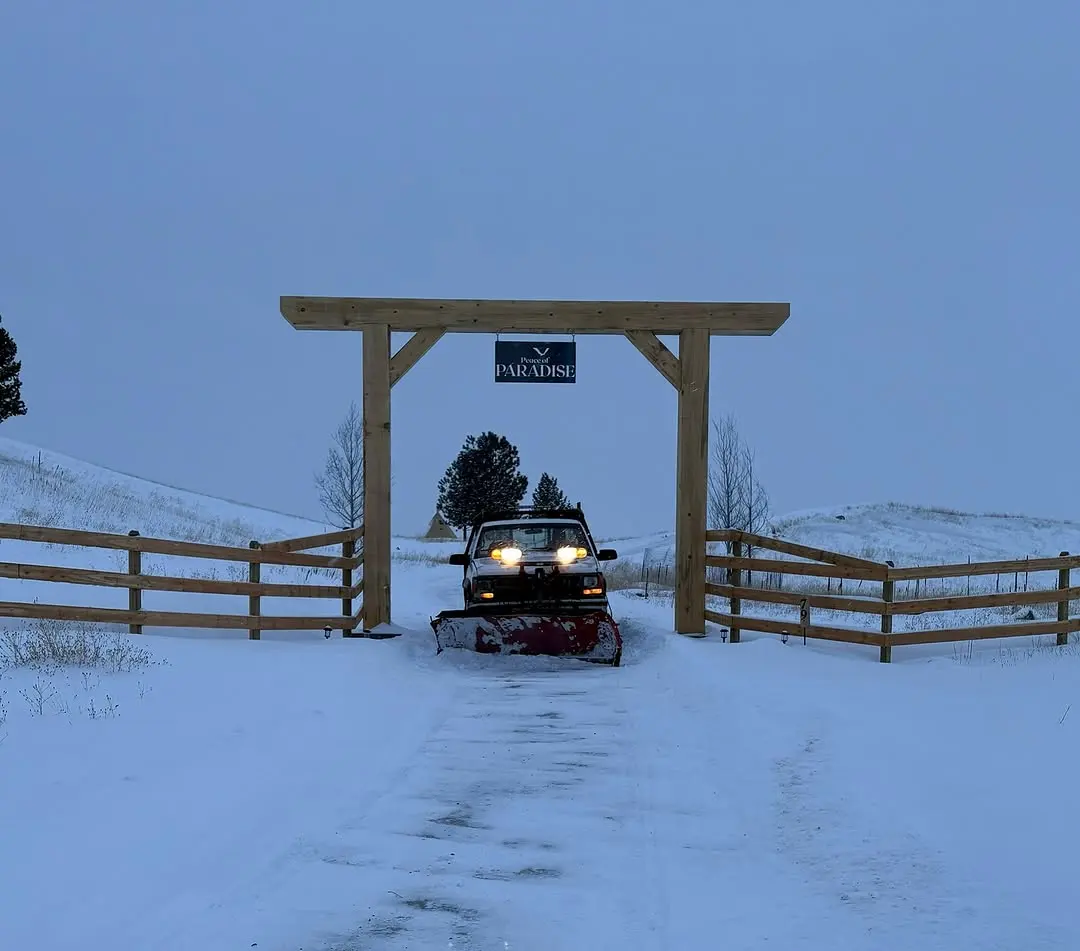
A snow contract is a decision you make in September so that February is boring.
Seasonal Snow Plowing Contracts in Paradise Valley, Montana
EZ Road Repair is based in Emigrant and runs winter routes the length of Paradise Valley — Livingston, Pray, Chico, Gardiner, and the ranch country between. A seasonal contract is written before the snow flies: we walk the property and set down what gets cleared, at what depth, in what order, and where the snow goes. After that, snowfall is the cue instead of your phone call. Contract properties are on the route by name; call-in work gets fit in around them. The week a foot falls overnight and the wind picks it back up, that’s the difference that matters.
When this matters
- You live at the end of a long private drive that nobody else is going to plow
- Feed trucks, stock trailers, and the vet have to reach the barn every morning of the winter
- You own a rental or second home, and guests arrive whether or not you’re in the state
- A shop, office, or clinic has to be open, parked, and walkable before anybody shows up
- Several households share one road and nobody wants to be the neighbor making the calls — that’s HOA and shared-road maintenance territory
- Wind reloads your driveway on days it never snowed at all
What actually goes in the contract
The part everyone expects is a number. The part that keeps you plowed is the plan behind it. Before winter we settle four things.
The trigger. Service starts at an agreed accumulation rather than a judgment call made ten miles away. Commercial lots and clinics usually want a low trigger — around two inches, sometimes cleared before opening regardless. Rural driveways and ranch roads more often sit at three or four, since plowing a dusting off a half-mile drive accomplishes little. Drift is written in separately: a wind event that closes a cut or a shelterbelt gap counts as service even with no new snow on the gauge.
The map. Which drives, lanes, turnarounds, parking rows, propane approaches, barn doors, and hydrant or dumpster pads get cleared, and in what order when we can’t do it all in one pass. Steep sections, culvert crossings, and anything a blade should stay off of get noted while the ground is bare.
Where the snow goes. The item most people never think about, and the one that causes trouble in March. Piles staged at the low end of a drive melt back across it and refreeze overnight. Piles dropped on a culvert inlet or in the ditch line dam the spring runoff. Piles at the road end blind the approach by January. On a Park County property with a septic drain field, stacking and driving compacted snow over the field is worth avoiding. We pick staging while we can see the ground.
Traction and the extras. Where sand or crushed traction material goes — grades, shaded curves, entries, walk zones — what happens when piles outgrow the site and need snow hauling, and how 24/7 emergency response fits when a storm outruns the plan.
Seasonal rate or per push
They price different things. A seasonal flat rate buys budget certainty — one number for the winter whether we come six times or twenty-six, which is why HOAs, businesses on a budget cycle, and absentee owners lean that way. Per-push charges for work performed: it wins in a mild year and gets expensive in a heavy one. If a bad winter would blow up your numbers, the flat rate is the point.
Where snow contracts go wrong
- Signing after the first storm. Routes are built geographically in fall, and by January the route is already shaped around everyone who signed in September.
- Ignoring drift. A driveway serviced on snowfall alone gets plowed on the wrong days. Here the wind does at least half the work.
- Bad staging. Snow piled where it melts back onto the surface, or on a culvert inlet, is an ice problem in February and a washout in April.
- Plowing a driveway that was never fixed. A rutted, soft, uncrowned surface catches the blade, drags gravel into the ditch, and holds water in every low spot until it ices over.
- No stakes. Once the ground freezes, the shoulders are guesswork. Edges, culvert ends, and obstacles get marked in fall or not at all.
How we approach it
We walk the property before freeze-up and write the plan with you — triggers, map, staging, traction, and the order of operations when a storm is big. If the surface needs help, fall is when we fix it: a regrade with fresh road mix restores the crown so the blade rides on a firm surface instead of tearing through ruts, and open ditches and culverts give the melt somewhere to go. Ice that returns to the same spot every year is almost always a drainage problem freezing in place. Then we stake the edges and obstacles, and you’re on the route.
Through the season we work the route in priority order — contract properties first, and within that, accounts that have to open early or feed livestock ahead of ones that can wait a few hours. Big storms take as long as they take; we’ll tell you where you sit rather than promise a clock. Homeowners can compare setups on our residential snow removal page, businesses on commercial snow plowing.
Serving Paradise Valley & Southwestern Montana
Based in Emigrant, we run winter routes throughout Paradise Valley — Livingston, Pray, Gardiner, Chico — and the ranch country between. Full winter lineup on the snow removal hub.
Get a snow plowing contract estimate
Call (406) 623-9075 or request a quote. Tell us the drive length, the drift exposure, and how early you need to be open, and we’ll walk the property and write the plan before the first storm decides it for you.
EZ Road Repair and Excavation — locally owned, Montana tough.