
A road nobody owns alone is a road nobody maintains on time.
HOA & Shared Road Maintenance in Paradise Valley, Montana
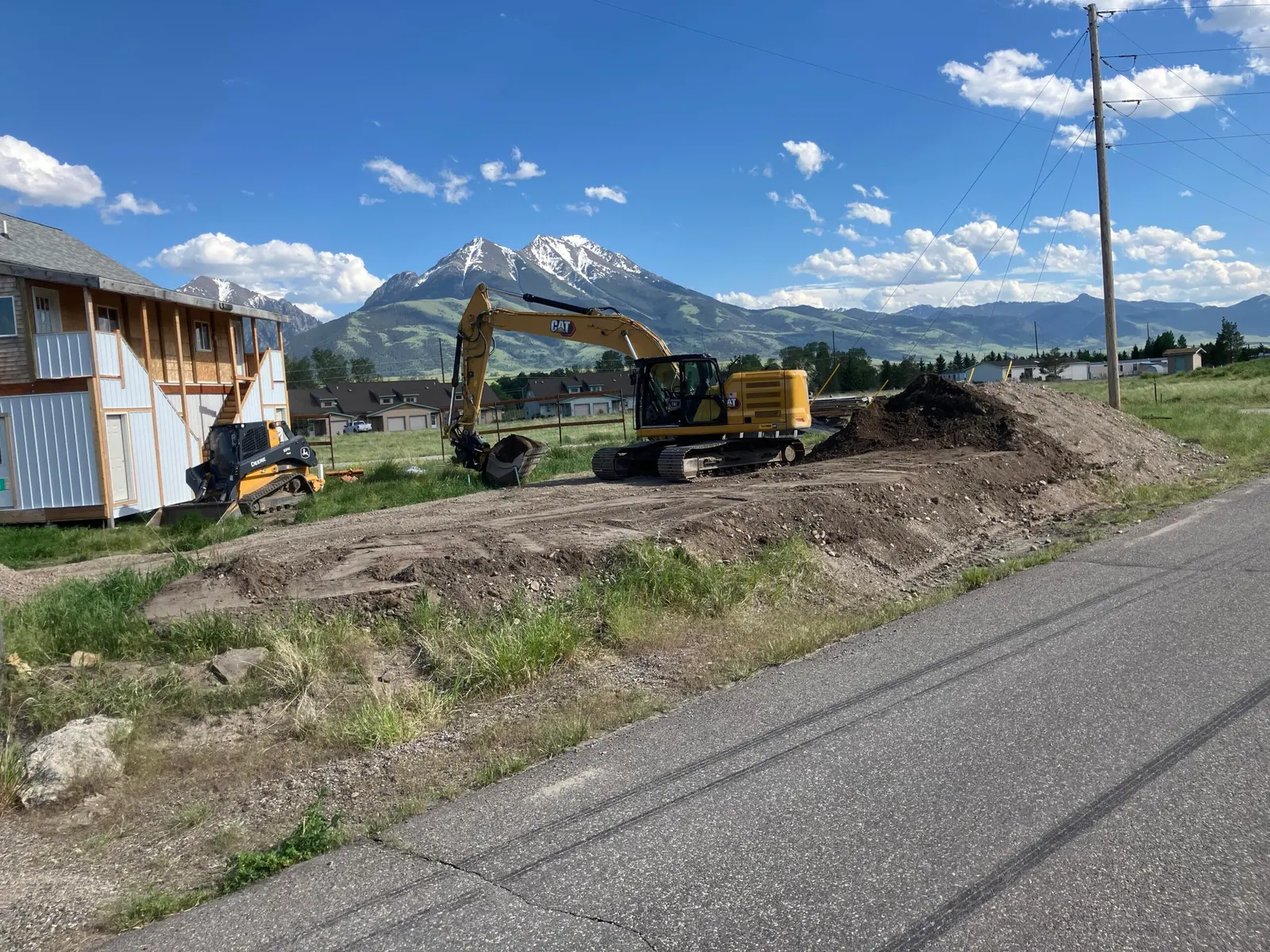
EZ Road Repair maintains subdivision roads, road-association roads, and shared private access for groups of neighbors across Emigrant, Livingston, Pray, Chico, and Gardiner. The dirt work is the same gravel road work we do everywhere in this valley. What makes a shared road different is that eight or thirty households have to agree on it first, and that it has to serve every driveway on it, the school bus, the propane truck, and a fire engine — not one family’s pickup. When either half fails, the road gets bladed every few years by whoever is angriest that spring, and the bill arrives all at once as a rebuild.
When this matters
- A subdivision or HOA road that gets patched by whoever complains loudest
- Several homes sharing a private road with no maintenance agreement behind it
- A road association that needs real numbers to budget and assess against
- A gravel road bladed for years while the actual failure points compound
- Winter access that depends on whichever neighbor’s plow truck starts
- A board turning over and nobody knowing what was done to the road, or when
Who owns what, and why it decides everything
Start here, because it changes the conversation. A road only gets county maintenance if the county has formally accepted it into its road system, and plenty of Paradise Valley subdivision and access roads never were — they are private, and the obligation sits with the lot owners. The plat, the covenants, and any recorded road maintenance agreement say who is responsible for what, how costs split, and who can commit the group to spending. Worth reading before budget season, not during a washout; an unclear easement is a question for an attorney or title company rather than for us.
The other half is physical ownership. The road easement usually covers the ditches and shoulders, not just the driving surface — which is why a neighbor who has filled or mowed a ditch flat has changed drainage for everybody. Driveway approach culverts are normally the lot owner’s, but a crushed or plugged one backs water onto the shared road. We scope group work and individual owner work separately so nobody is surprised by what is and isn’t in the number.
Where shared roads go wrong
- Blading instead of fixing. Most shared roads have three or four real failure points — a flat stretch with no crown, a missing or undersized culvert, a soft cut that pumps every spring — and grading the whole road every year to compensate is the expensive way to live with them. Regrade or rebuild is the first honest question.
- Nobody owns the ditches. Ditch lines silt in and grow over within a couple of seasons, and a ditch that has stopped moving water sends it down the travel lane instead. Ditches need continuous grade, usually on the order of 1 to 2 percent, and a place to discharge that isn’t a member’s hayfield.
- Deferred until it’s an emergency. Scheduled work is the cheapest work there is. A washout in April, when every contractor in the county is already committed, is the most expensive.
- Snow stored where it becomes spring’s problem. Berms plowed across driveway approaches, piles stacked where meltwater runs back onto the road, and banks at the intersection nobody can see around.
- Access nobody checked until they needed it. Width for a fire engine to get past a parked car, a turnaround at the end so a bus isn’t backing a half mile, overhanging branches, and a spring-soft base that won’t hold loaded apparatus. Your rural fire district and the school district are the ones to ask what they need.
- No reserve. Without a set-aside, a single culvert failure turns into a special assessment and another year of arguing.
Working around people who live there
A shared road is somebody’s only way home, so we work in sections and keep access open, and stage material where it isn’t blocking driveways. The board gets the schedule before we’re on site. Timing follows the ground: no heavy blading during spring breakup, when the surface has thawed over a still-frozen base and the road will rut under a pickup; runoff damage gets repaired once it dries; ditch and culvert cleanout happens before freeze-up; and the plow contract is set well before the first storm, not during it.
How we approach it
We drive the road with someone from the board or the group and follow the water first — where it comes from, where it sits, where it should go. What comes back is a written condition summary the group can discuss: the failure points, the fix for each, what is urgent, and what can wait. From there the seasonal cycle is straightforward — reshape ditches and clear every culvert, cut deep enough to remove ruts and washboard rather than skim them, re-establish crown with grading and leveling at roughly 2 to 4 percent of fall from centerline to shoulder, blend in road mix where the surface has thinned, and compact it. Sections whose base is gone get real road construction and repair instead of another year of maintenance grading; where the water problem is bigger than the ditch, we build actual drainage. Then the same road goes on a seasonal snow contract for winter — and a crowned, drained road plows faster than a flat rutted one.
Serving Paradise Valley & Southwestern Montana
Based in Emigrant, we maintain shared, subdivision, and association roads throughout Paradise Valley — Livingston, Pray, Chico, Gardiner — and the surrounding Park County communities.
Get a shared-road maintenance estimate
Call (406) 623-9075 or request a quote. Tell us how long the road is, how many households share it, and what it does in spring. We’ll walk it and put together a scope and a straight estimate your group can vote on.
EZ Road Repair and Excavation — locally owned, Montana tough.