
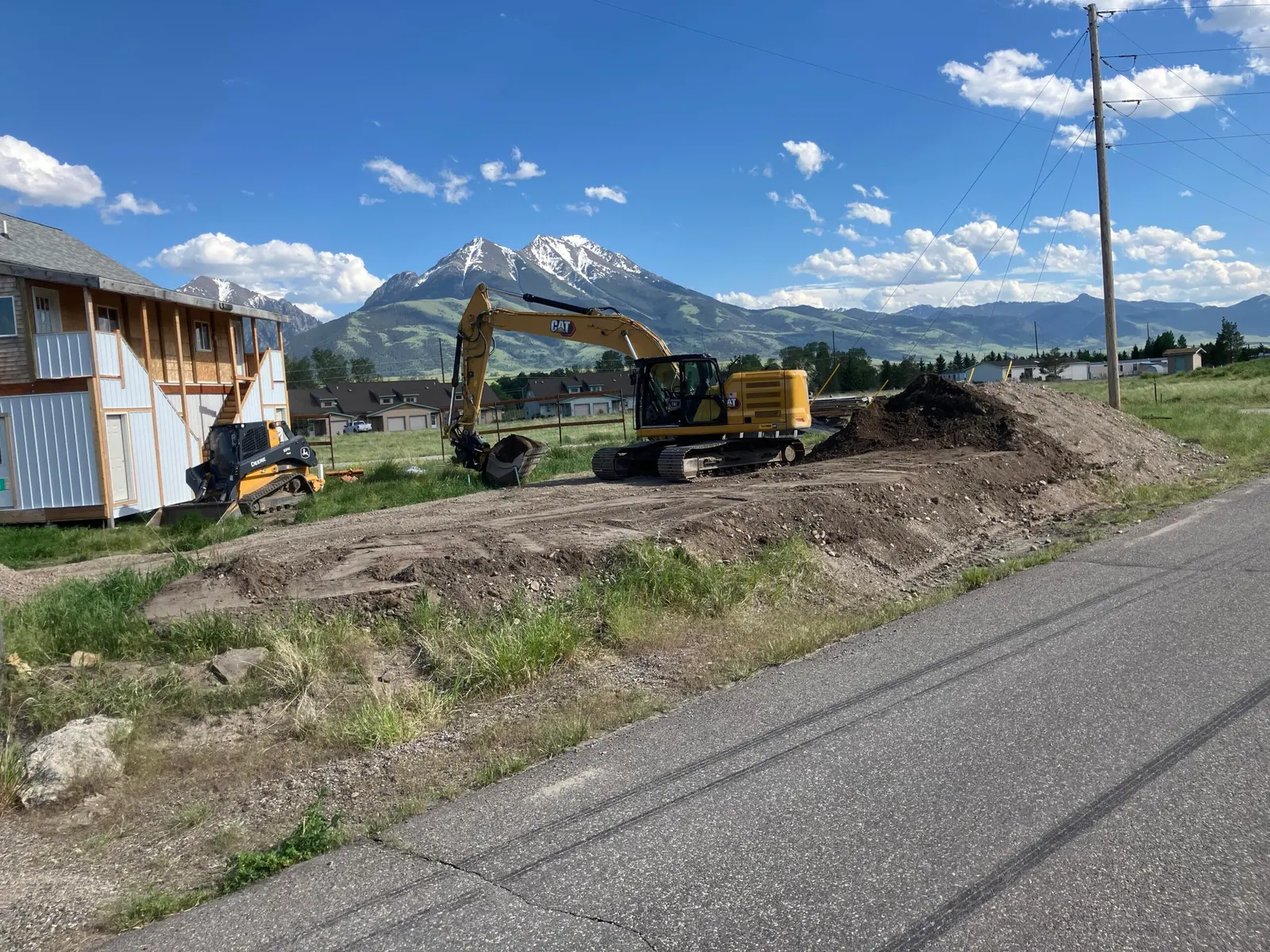
Keep the road you have. Maintain it before you have to rebuild it.
Road Maintenance in Paradise Valley, Montana
A gravel road is not a finished object — it wears, sheds material, and loses its shape a little more every season. Out here that clock runs fast. Spring runoff saturates the base, summer traffic drives the fines out as dust, and freeze-thaw works on all of it through the winter. EZ Road Repair maintains gravel roads, private driveways, shared subdivision roads, and ranch access across Emigrant, Livingston, Pray, Gardiner, Chico, and the rest of Paradise Valley — on a schedule, so the road never gets far enough gone to need rebuilding.
When this matters
- Washboard corrugations that rattle your truck on the same stretch every time
- Potholes that come back in exactly the same spots after every rain
- Ruts holding standing water, or a road that has gone flat and no longer sheds
- Ditches grown in with sod and silt, or a culvert inlet packed with debris
- A dust cloud behind every vehicle all summer
- Soft, pumping spots that show up during spring breakup and mud season
- A shared subdivision or HOA road nobody has put on a maintenance schedule
Washboard, potholes, and what is actually causing them
Washboard is a material and moisture problem, not a surface problem. Corrugations form where traffic accelerates, brakes, and turns on a dry, loose surface that has lost its binder. The fines in road mix are what lock the aggregate together; once they blow off as dust, the rock rolls loose and tires pump it into ridges. This is why blading only the tops of washboard is wasted money — if the cutting edge does not get below the bottom of the troughs, you have skimmed rock off the ridges into the valleys and the same pattern is back within weeks. The fix is cutting the full depth of the corrugation, mixing that material back together with enough moisture to bind, respreading, and compacting.
Potholes start with water, not traffic. Any low spot that holds water softens the material under it; the next loaded vehicle punches through, the hole deepens, and it catches more water. That is why a road with a proper crown — roughly 2 to 4 percent of fall from centerline to shoulder, about a quarter to a half inch per foot — gets far fewer potholes than a flat one. Water that leaves the surface in seconds never gets the chance to work on the base.
What Montana conditions do to a road
Water is the whole story, and this valley delivers every version of it. Through winter, moisture trapped in the base freezes and lifts; in spring the top thaws first while the ground below is still frozen, so meltwater has nowhere to drain and the base goes saturated and weak. That is spring breakup — the few weeks when a road that carried loaded trucks all fall will rut under a pickup. Running heavy equipment across a road in that window does more damage than a whole summer of traffic, which is why we time grading cycles to the ground rather than the calendar.
The other half is what happens off the driving surface. Ditches silt in and grow over within a couple of seasons, and a filled ditch quietly stops carrying water — it sends it down the road instead, where it cuts ruts and strips gravel. Ditch grade needs to keep moving, usually on the order of 1 to 2 percent, and it needs somewhere to discharge. Culvert inlets plug with brush, sediment, and beaver work, and a plugged culvert overtops and takes the road fill with it.
Dust deserves the same seriousness. That cloud is your binder leaving the road — fines you will eventually buy back as new material. Dust control on a busy drive or ranch road pays for itself twice: once in comfort, once in gravel.
Maintenance or rebuild — knowing which one you are buying
Maintenance is shaping and refreshing a road whose base is still sound. A rebuild means the base itself is gone. The tells are honest and easy to read: ruts that return within weeks of a fresh grade, soft spots that pump water under a loaded axle, no gravel left for the blade to work with, or a grader that hits subgrade clay. When we find that, we say so — patching a failed base is money spent twice, and the real answer is road construction and repair with proper base, lifts, and compaction. When the base is sound, regular grading keeps a road serviceable for years — we go deeper on that call in when to regrade versus rebuild.
How we approach it
We walk the road first and follow the water — where it comes from, where it sits, where it should go. Then the sequence is straightforward: reshape the ditches and check every culvert so the road has an outlet, cut deep enough to remove ruts and washboard rather than skim them, blend in new road mix where the surface has thinned, re-establish the crown with grading and leveling, and compact it instead of leaving it loose to be pounded out by traffic. Where the water problem is bigger than the ditch line, we tie in real drainage work or culvert installation and repair instead of grading around it every year. A well-shaped, well-drained road is also a far easier road to plow when snow removal season comes.
Serving Paradise Valley & Southwestern Montana
Based in Emigrant, we maintain roads, driveways, and ranch access throughout Paradise Valley — Livingston, Pray, Gardiner, Chico — and the surrounding rural and mountain properties.
Get a road maintenance estimate
Call (406) 623-9075 or request a quote. Tell us how long the road is and what it is doing wrong. We will walk it, tell you honestly whether it needs a grading cycle or something more, and give you a straight estimate.
EZ Road Repair and Excavation — locally owned, Montana tough.