
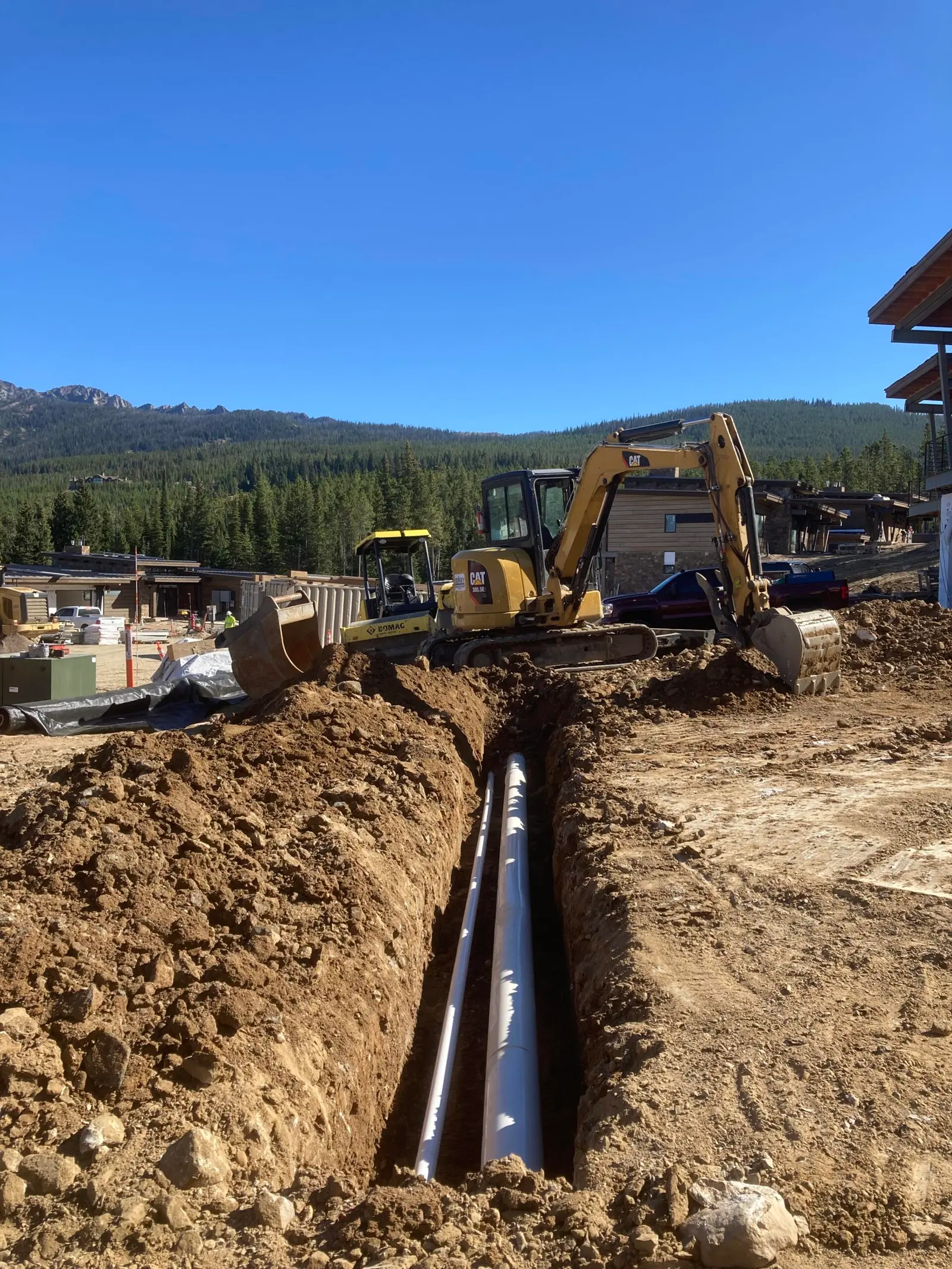
Snowmelt doesn’t damage a property at random — it hits exactly where the water had nowhere else to go.
Spring Runoff Damage Repair in Paradise Valley, Montana
Every spring the snowpack this valley spent five months collecting comes down in a few weeks, and on the way it finds every plugged culvert, flat ditch, and unprotected grade on the property. EZ Road Repair repairs runoff and mud-season damage across Emigrant, Livingston, Pray, Gardiner, Chico, and the side drainages that feed them. The order matters: reopen access first, then correct the cause, so next April’s melt doesn’t take the same toll on the same stretch of road.
When this matters
- A washout took out a section of driveway and you can’t get a vehicle in or out
- A culvert ran full, then quit, and the water crossed over the road instead of through it
- The ditch that worked last year is either silted flat or carved two feet deep
- Ruts appeared overnight in a road that carried loaded trucks all winter
- A gully is working uphill toward a road, fence line, or building pad
- Runoff off a hillside or a neighbor’s field now crosses ground it never used to
- A pasture, yard, or pond filled with silt from upstream
What the melt actually does
The damaging part of runoff isn’t the volume, it’s that the ground underneath is still frozen. Meltwater that would soak in during a July rain has nowhere to go in April, so nearly all of it becomes surface flow. Add a warm night, or rain falling on snow, and a drainage that trickles most of the year moves more water in three days than in the rest of the season combined. Aspect stretches it out: south-facing slopes shed first while shaded draws hold snow for weeks, so one culvert can see two peaks, the second arriving after everyone assumed the worst was over.
Culverts fail from the inside. Water standing in a pipe over the winter freezes into a plug that grows through the barrel, and by the time the melt arrives the pipe is a solid stick of ice. Flow backs up at the inlet, finds the low point of the shoulder, and the road becomes the channel. Once water runs lengthwise over gravel it takes the fines first, and fines are the binder — strip them out of road mix and what’s left is loose rock that won’t compact or hold a crown.
Underneath, thaw weakening does the quiet damage. Meltwater gets trapped in the base above subgrade that’s still frozen, the road saturates, and for a few weeks it carries a fraction of its normal load. A loaded truck crossing in that window pumps fines to the surface and prints ruts that stay all summer — which is why a road gets destroyed in April by traffic it handled easily in January.
Where this goes wrong
- Filling the hole and calling it done. The washout is the symptom. If the culvert behind it is still undersized or still plugged, the fill is a down payment on next spring’s repair.
- Ignoring the headcut. Gullies erode upstream from a nick point. Smoothing the bottom and leaving the head untreated lets the gully keep marching toward whatever is above it.
- Unarmored outlets. Water leaving a pipe with velocity digs a plunge pool, and the pool cuts back until the pipe loses support and drops. Outlets need riprap sized to the flow and keyed below grade, not cobble tossed at the end.
- Ditches at the wrong grade. Roughly 1 to 2 percent carries water without tearing itself apart. Flatter silts in until the ditch is decorative; steeper and it becomes the gully.
- A flat road. A crown of about 2 to 4 percent moves water off the surface in a few feet. A road bladed flat over the years collects it instead and erodes itself.
- Rebuilding in the mud. Base compacted on saturated ground doesn’t stay compacted. Some work should honestly wait a few weeks, and we’d rather say so than build it twice.
Triage season
The whole valley takes its damage in the same two or three weeks and everybody finds it the same morning, so we work spring as triage: cut-off properties and unsafe approaches first, then damage that’s actively getting worse (a live headcut, an undermined culvert, a slope still feeding sediment), then what’s ugly but stable. Ongoing road maintenance and contract customers get worked into the route first.
How we approach it
We walk the damage while the evidence is still readable — high-water marks, silt lines, and the direction the scour ran tell us where water crossed and roughly how much of it there was. If you’re cut off, temporary fill and grading reopen the route first, built to survive the rest of the melt, not to look finished. Then we fix the cause: culvert cleaning, resizing, or replacement with inlet and outlet armored; ditches and swales cut to grade so the hillside is intercepted before it reaches the road; erosion control on slopes and banks still moving material. Failed sections get rebuilt in compacted lifts and re-crowned once the base can take it — road repair done properly, not a blade pass over mush. Before we pull off, the whole drainage path gets checked end to end, because a fixed culvert discharging onto an unprotected slope has only moved the problem downhill.
Most of what we repair in April was preventable the previous September. If you’re reading this in the fall, our Montana rural drainage guide covers what to walk and check.
Serving Paradise Valley & Southwestern Montana
Based in Emigrant — mid-valley, which matters when the roads are soft — we run spring repairs throughout Paradise Valley: Livingston, Pray, Gardiner, Chico, Tom Miner, and the surrounding drainages.
Get a spring runoff repair estimate
Call (406) 623-9075 or request a quote. Tell us what failed, whether you still have access, and what the water is doing, and we’ll give you straight timing and a repair built to outlast the melt.
EZ Road Repair and Excavation — locally owned, Montana tough.